Blog
Blog
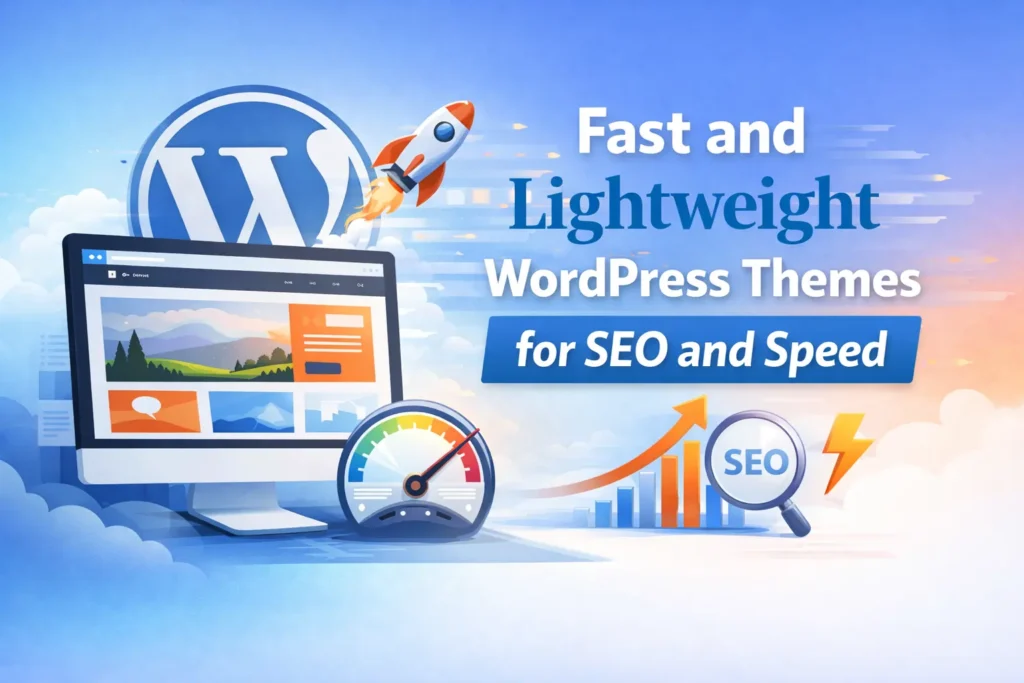
Website speed has become a deciding factor in online success. Users expect pages to load almost instantly, and search engines increasingly favor websites that deliver fast, smooth experiences. While hosting and optimization plugins matter, one of the most overlooked performance factors is the WordPress theme itself.
Many website owners focus heavily on design and visual appeal. While design plays an important role, it often comes at the cost of performance when themes are overloaded with animations, scripts, and unnecessary features. A visually impressive website that loads slowly struggles to retain users, rank well, or convert visitors.
This article is written for bloggers, affiliate marketers, creators, and business owners who want to build fast, SEO-friendly WordPress websites from the ground up. If your priority is performance, Core Web Vitals, and long-term scalability, choosing a lightweight theme is one of the smartest decisions you can make.
Why WordPress Theme Speed Matters More Than Ever
Speed is no longer just a technical metric. It directly influences how users perceive your website and how search engines evaluate it. Slow-loading websites frustrate visitors, increase bounce rates, and reduce engagement.
From Google’s perspective, speed is closely tied to user experience. Metrics such as loading time, interactivity, and visual stability are now part of how websites are assessed. A fast theme helps your site meet these expectations more easily.
For content-driven websites, speed also affects crawl efficiency. Search engines can crawl fast websites more frequently and more deeply, which helps new content get indexed faster. Over time, this can have a noticeable impact on organic traffic growth.
In competitive niches, even small speed improvements can make a difference. Choosing a lightweight theme gives your website a performance advantage that compounds over time.
Understanding What Makes a WordPress Theme Fast
A fast WordPress theme is not simply one that looks minimal. True performance comes from how the theme is coded and structured behind the scenes.
Lightweight themes avoid loading large JavaScript libraries unless absolutely necessary. They rely on native WordPress features instead of reinventing basic functionality. This keeps file sizes small and reduces browser workload.
Another important factor is modular design. Performance-focused themes allow features to be enabled only when needed. This prevents unnecessary assets from loading on pages where they are not required.
Well-built themes also follow modern coding standards, ensuring compatibility with caching plugins, content delivery networks, and optimization tools. This makes it easier to improve speed further without conflicts.
How Heavy Themes Hurt SEO and Performance
Feature-rich themes often advertise dozens of demos, sliders, animations, and bundled plugins. While these features look attractive in previews, they often add significant overhead to real-world websites.
Heavy themes load more CSS and JavaScript files, increasing page size and slowing down rendering. They can also create layout shifts and delayed interactions, which negatively affect Core Web Vitals.
Another issue with bloated themes is maintainability. Updates become riskier, conflicts are more common, and performance tuning becomes harder. Over time, this leads to technical debt that limits growth.
For SEO-focused websites, these drawbacks usually outweigh any design convenience.
Fast Themes vs Page Builders: A Realistic View
Page builders are often blamed for slow websites, but the reality is more nuanced. A lightweight theme combined with a page builder can still perform well if used carefully.
The problem arises when heavy themes and page builders are stacked together. This combination often results in excessive scripts, nested layouts, and unnecessary styling.
Fast themes are designed to work well both with native WordPress blocks and with page builders. They provide a clean base that allows you to control how much complexity you introduce.
If performance is a priority, the theme should never fight against optimization efforts.
Best Fast & Lightweight WordPress Themes for SEO
After evaluating performance benchmarks, code quality, flexibility, and real-world usage, the following themes consistently stand out for speed-focused WordPress websites.
GeneratePress – Best Overall Theme for Speed and SEO
GeneratePress is widely regarded as one of the fastest WordPress themes available. It is built with a strict performance-first philosophy, keeping the core theme extremely small and efficient.
Out of the box, GeneratePress loads minimal CSS and JavaScript, resulting in very small page sizes. This makes it easier to achieve fast load times even before additional optimization.
While the default design is intentionally minimal, the premium version adds layout controls that allow you to build professional designs without compromising speed. This balance makes GeneratePress especially popular among SEO professionals and affiliate marketers.
GeneratePress is ideal for content-heavy websites where performance and stability matter more than visual complexity.
Astra – Best Balance of Speed and Flexibility
Astra is known for combining performance with usability. It is lightweight by default and loads assets conditionally, ensuring that unnecessary files are not loaded on every page.
The theme integrates smoothly with both Gutenberg and popular page builders. When configured properly, Astra can deliver excellent performance while still supporting complex layouts.
Astra is a strong choice for users who want speed without sacrificing design flexibility. It works well for blogs, business websites, and landing pages.
For many users, Astra offers the most practical balance between speed, customization, and ease of use.
Kadence – Lightweight Theme with Advanced Controls
Kadence focuses on offering more built-in design controls while maintaining solid performance. It provides efficient header and footer builders, typography settings, and layout options.
Unlike bloated themes, Kadence implements these features with performance in mind. When unnecessary options are avoided, the theme performs well in speed tests.
Kadence is well suited for users who want more visual control than minimalist themes but still care about SEO and performance.
Neve – Mobile-First and Performance-Oriented
Neve follows a mobile-first design approach, which aligns well with modern SEO requirements. It loads quickly on mobile devices and adapts efficiently to different screen sizes.
The theme integrates cleanly with Gutenberg and page builders while keeping the codebase lean. Its simplicity makes it easy to optimize further using caching and image optimization.
Neve is a good choice for bloggers and small business websites that prioritize mobile performance and simplicity.
Blocksy – Optimized for Gutenberg Performance
Blocksy is built specifically for the block editor and modern WordPress development standards. Its architecture focuses on loading only what is necessary.
This approach results in good performance while still offering advanced customization options. Blocksy works particularly well for users who prefer native WordPress blocks over third-party builders.
For SEO-focused websites that want to stay aligned with the future of WordPress, Blocksy is a strong contender.
Hello Elementor – Ultra-Minimal for Elementor Users
Hello Elementor is a stripped-down theme designed to give Elementor full control over design. The theme itself adds almost no overhead, making it extremely lightweight.
Performance depends heavily on how Elementor is used. Clean layouts and optimized widgets can result in fast-loading pages, while complex designs can still slow things down.
This theme is best for users who rely entirely on Elementor and understand how to optimize their layouts responsibly.
How Theme Choice Affects Core Web Vitals
Core Web Vitals focus on loading speed, interactivity, and visual stability. A lightweight theme supports all three metrics by reducing render-blocking resources and unnecessary scripts.
Fast themes improve Largest Contentful Paint by loading main content quickly. They also reduce layout shifts by avoiding late-loading elements and excessive animations.
While plugins and hosting also influence Core Web Vitals, theme choice determines the baseline. Starting with a fast theme makes optimization significantly easier.
Theme, Hosting, and Plugins: How They Work Together
A theme does not operate in isolation. Hosting quality, plugins, and content all interact with your theme to determine performance.
Fast themes perform best on reliable hosting with modern infrastructure. They also pair well with caching and optimization plugins that enhance speed without conflicts.
On the plugin side, fewer and lighter plugins usually result in better performance. A lightweight theme reduces the need for multiple design or utility plugins, keeping your site lean.
Think of your theme as the foundation. A strong foundation allows everything else to work more efficiently.
When a Fast Theme Still Fails
Even the fastest theme can perform poorly if misused. Common issues include importing heavy demo content, adding too many plugins, or uploading unoptimized images.
Another common mistake is layering multiple design systems together. Using a block editor, page builder, and custom CSS simultaneously often creates unnecessary complexity.
Speed-focused websites require discipline. A fast theme provides the potential, but good decisions are still required.
How to Test Theme Speed Properly
Testing the theme speed should be done carefully. Results can vary based on hosting, caching, and content.
The best approach is to test themes on the same hosting environment with minimal plugins. Focus on real-world metrics rather than chasing perfect scores.
Performance testing should guide decisions, not dominate them. A consistently fast and stable website is more valuable than one optimized solely for benchmarks.
Final Verdict: Best Fast & Lightweight WordPress Themes
Fast and lightweight WordPress themes play a crucial role in SEO, user experience, and website scalability. Choosing the right theme early prevents performance issues and technical limitations later.
GeneratePress remains the strongest choice for pure speed and SEO. Astra offers flexibility without significant performance trade-offs, while Kadence, Neve, and Blocksy provide excellent alternatives for different workflows. Hello Elementor is ideal for Elementor-based builds when used carefully.
A fast theme does not guarantee success, but it removes unnecessary obstacles and gives your content the best possible environment to perform.